
UNDERSTANDING BAR PATH IN THE CLEAN & SNATCH
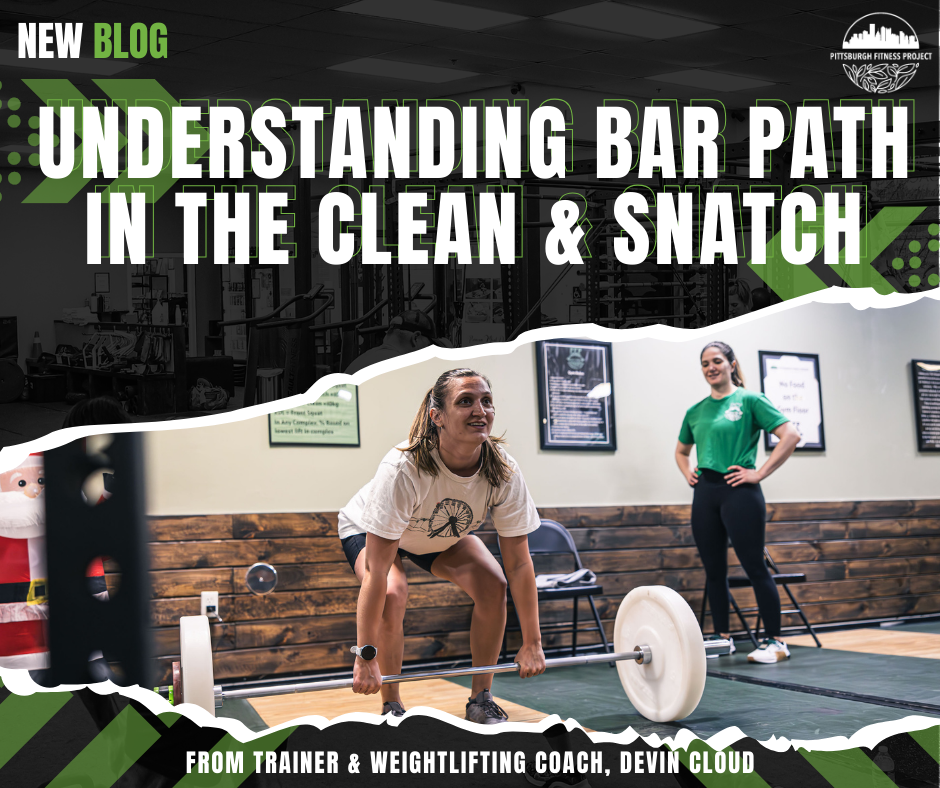
The path of the bar in weightlifting is all about moving yourself in accordance with the weight as smoothly and efficiently as possible. When you’re first learning weightlifting, the movements can feel unstable and clunky. The way it is usually taught is in segments to make it easier to understand and process. This process is known to some as the “ top-down” method. Essentially, we are starting from our hip position, where the bar would be just before we extend and move the bar to our overhead position. Every subsequent position down towards the ground, our “start” position for a full lift, adds more complexity and requires us to be more aware of where we and the bar are moving simultaneously. In order to make it easier to understand, we will talk about the path from the floor to overhead to make the sequence one seamless progression to picture the overall lift.
Are They The Same?
For both the snatch and clean, the paths from the floor to the hip are nearly identical; you may find slight differences when it comes to body proportions, age, height, etc., but overall they’re one and the same. The start position of the lifter for both involves the feet being placed directly under the bar, so when you look down, the bar is right over the midfoot or where your laces on your shoes are. This is the direct line of gravity pulling on the bar straight down. When the lifter grabs the bar, the knees should be bent and slightly lower than the hips, and the hips should be lower than the shoulders. This may vary slightly in the clean due to a closer grip, but the rules should still apply overall: knees, then hips, then the shoulders. This ensures our shoulders are covering the bar so that we apply force properly onto the bar.
The First Pull
As the lifter pushes down and begins the lift from the floor to the knee, we call this the “first pull”, the bar elevates and should move back slightly in towards the body. The reason here is that we want to keep the bar in close proximity to the body to prevent becoming imbalanced as it drives it up. At this point, the arms are long, the back is flat, the chest is up, and you may feel the balance in your feet slightly towards your heel, but the toes are still down.
The Second Pull
During what is called the “second pull” from the knee to the hip, the lifter continues to drive the feet down while the hips and knees extend at the same time. At this point, the bar path has now shifted slightly back over the midfoot until it gets to the hip.
And Where They Differ?
Now here is where they differ. For the snatch, once the bar reaches this point, the bar begins to accelerate into what is called the “third pull”. If you tracked the end of the barbell with a dot, you may see the bar move slightly away from the body. This is totally normal. As long as the lifter remains in contact and is actively pulling up on the bar, this will allow them to stay balanced and land in position under the bar, where they can stabilize and stand up to finish the lift. For the clean lift, the lifter accelerates the bar and drives the elbows up with knuckles remaining pointed towards the floor. This keeps the bar close to their body. Once they drive the elbows up, they will immediately rotate their elbows quickly and pull themselves under the bar, with it landing on their shoulders before standing. Again, the bar may seem to move away from them, but this is necessary to complete the extension and pull effectively on the bar.
The Bigger Picture
When it's all done, the bar should complete this backwards soft “S” shaped path. The sequences that need to occur for this to come together should be practiced in pieces to ensure each part is proficient before trying to complete it all at once. Using variations of the lifts, like muscle snatch/clean, hang snatch/clean, allows us to focus on individual parts of the lifts and bar path. Use them in conjunction with full lifts to ingrain technique and improve your overall performance.
If lifting feels intimidating but you’ve always wanted to try it, our Barbell Club may be the perfect fit!