
JOINT-FRIENDLY STRENGTH TRAINING: 50+
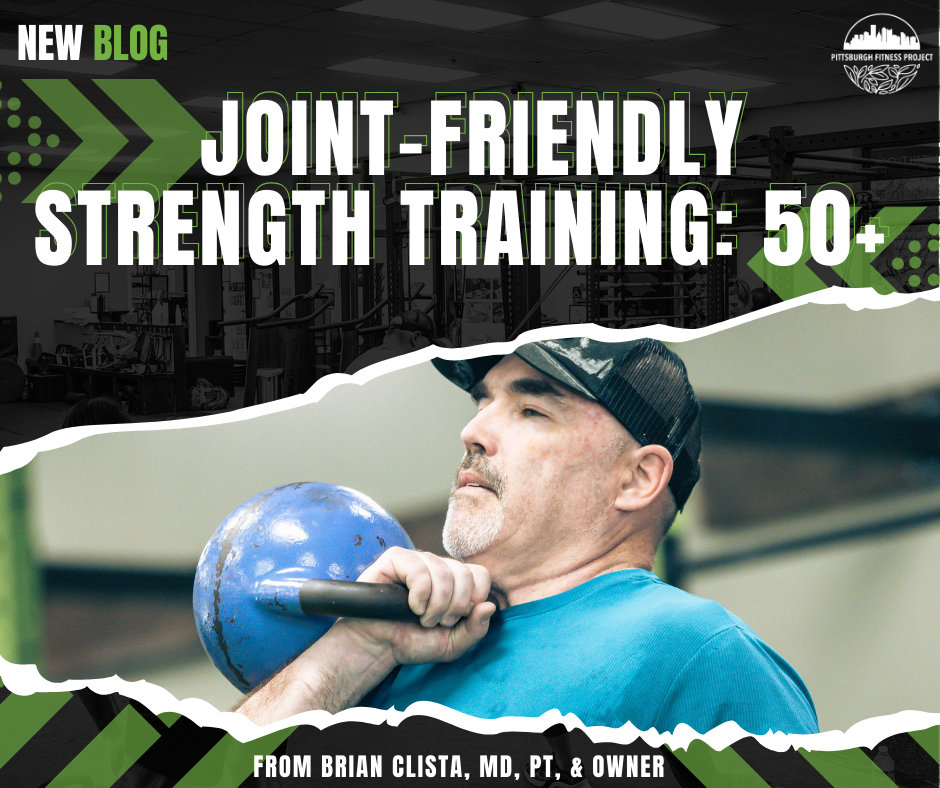
Most of us will develop some joint aches and pains as we age. While it might seem contradictory, strength training helps preserve joint function and range of motion as you get older.
As a follow-up to last week’s blog about strength and longevity, let’s look more specifically at joint-friendly strength training when you are over 50.
Why Strength Training Helps Your Joints
Your joints are supported by muscles, tendons, and ligaments. Strengthening these structures reduces the forces on the joints during exercise. More recent research reviews show that people with hip and knee osteoarthritis have significant improvements in pain, strength, and joint function with strength training.
Let’s look at how best to start strength training for your joints when you’re over 50.
Follow General Joint Safety
● Warm up your joints: Do dynamic stretches to prepare your joints for lifting.
● Use slow, controlled movements: Steady, slow movements that prevent jerking can protect your joints and reduce impact forces.
● Watch your form: Have a trainer or physical therapist ensure you are performing exercises correctly.
● Start slowly: Gradually build strength around your joints and increase weightlifting volume slowly.
Joint-Friendly Exercises
● Try compound exercises: Squats and presses work multiple joints at once and take stress off a single joint.
● Use support when needed: Use walls or benches to ease the load on joints.
● Don’t forget your core: Planks, bird dogs, and dead bugs - oh my! These provide a great workout without stressing your joints as much.
Allow for Recovery
As in all things old, allow yourself to rest. Try not to strength train on successive days, and if your joints are actively inflamed, take a break.
Low-impact cardio training, such as walking or biking, is also great for joint health. Plus, try yoga or Tai Chi to improve flexibility and range of motion.
Ready to Learn More?
If you want to learn more about strength training at PFP, schedule an assessment through our Get Started page to begin your fitness journey!