
SQUAT VARIATIONS FOR OLYMPIC WEIGHTLIFTING
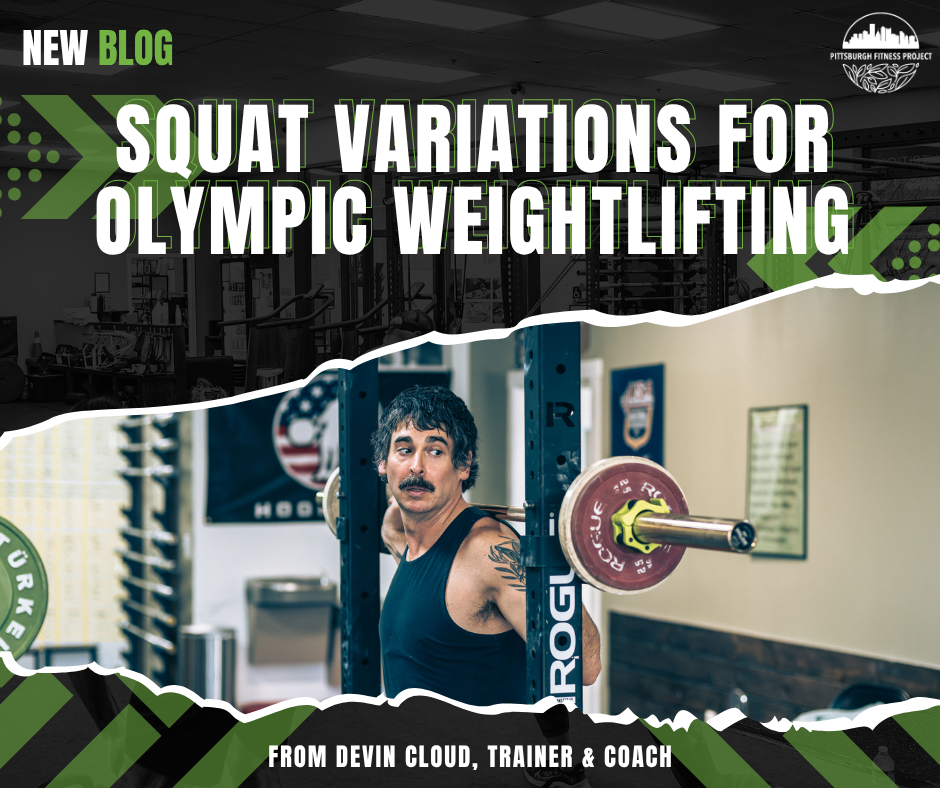
In the sport of Olympic Weightlifting, squatting is king. It is the movement we as lifters use to drive most of the leg strength and overall adaptations for our performance. It allows us to increase our ability to apply force into the ground, which then translates force and power into the barbell when we lift. It is almost a direct correlation to weightlifting performance other than getting better technical proficiency in the lifts themselves. Although there are many ways to use squats in a program. Straight-up back and front squats are a staple in a program, but sometimes as coaches we prescribe different variations of these squats for a multitude of reasons: such as working on positional strength, strength deficits in certain areas of the squat pattern, or even as a temporary change for working around injuries and other issues. Let's discuss some of these, why we use them, and how they’re programmed.
Isolating the Squat Pattern
First, we will talk about isolating different areas of the squat pattern. The squat pattern from top to bottom is like a gradient. The closer we are to a standing position the stronger we feel. This makes sense because our lower body muscles are contracted in the most shortened position, which is standing, and our hips are in line with our spine. As we bend at our hips, knees, and ankles all of the muscles lengthen and this causes them to exert force and resist being stretched until we get to the most lengthened position, the bottom of the squat. This is, in theory, is the weakest point of your squat.
The Variation Gradient
Some of our variations will begin somewhere along this gradient of the squat pattern. So an example of one could be “back squat with pause in the bottom.” This takes away the elastic component we would normally get from shooting right up out of the squat and forces us to generate more force to overcome it while simultaneously working our balance and control in the bottom of the squat. This is great for athletes who often have issues with hitting a full range of the movement or who need to work on building positional strength.
The Halfway Point
Another point in the gradient where you may feel weak or impeded is the halfway point on the way up. We sometimes refer to this as a “ sticking point” ; some athletes may find themselves failing squats on the way up from the bottom position. A potential solution for this is to work on “bottom-up half squats”. The lifter uses blocks or safety catches to set the bar at a specific position in their pattern. This forces them to create force from a normally weak position and build strength and confidence from this otherwise weak point. For this and squats with a pause in the bottom, we usually start with reps in the 3-8 rep range with loads of 60-80% of their one-rep max. This range can vary, and some athletes can sometimes exceed this range, especially as they get closer to a standing position. Start with light to moderate intensities and build as the lifters gains strength and movement confidence.
Squat Around Injuries
The last part we will talk about is using squat variations to work around injuries. Weightlifting, like any other sport, has injuries, while the rates are low, little bumps and bruises sometimes need workarounds. A common issue may be hip or knee pain that occurs at certain ranges of motion. With the recommendation and help of a medical professional, a lifter may be able to do something like box or pin squats. This means the lifter uses either a box or safety catches to limit the range of squat depth. This may mean they're only squatting down a quarter or halfway in their squat pattern. As long as it remains pain-free, this is generally a good temporary fix to these hip and knee issues and will allow the lifter to maintain their leg strength with no added harm. Rep ranges and intensity will vary greatly, but as long as you work closely with a coach and a medical professional like a physical therapist, it should go well.
Starting Off & Learning More
There are many other variations, but these are a great start for any lifter looking to work on improving their squat strength as well as trying new variations in their program. If you want to learn more, book an assessment with one of our weightlifting coaches!