
SNATCH FOUNDATIONS: BEGINNER MISTAKES & FIXES
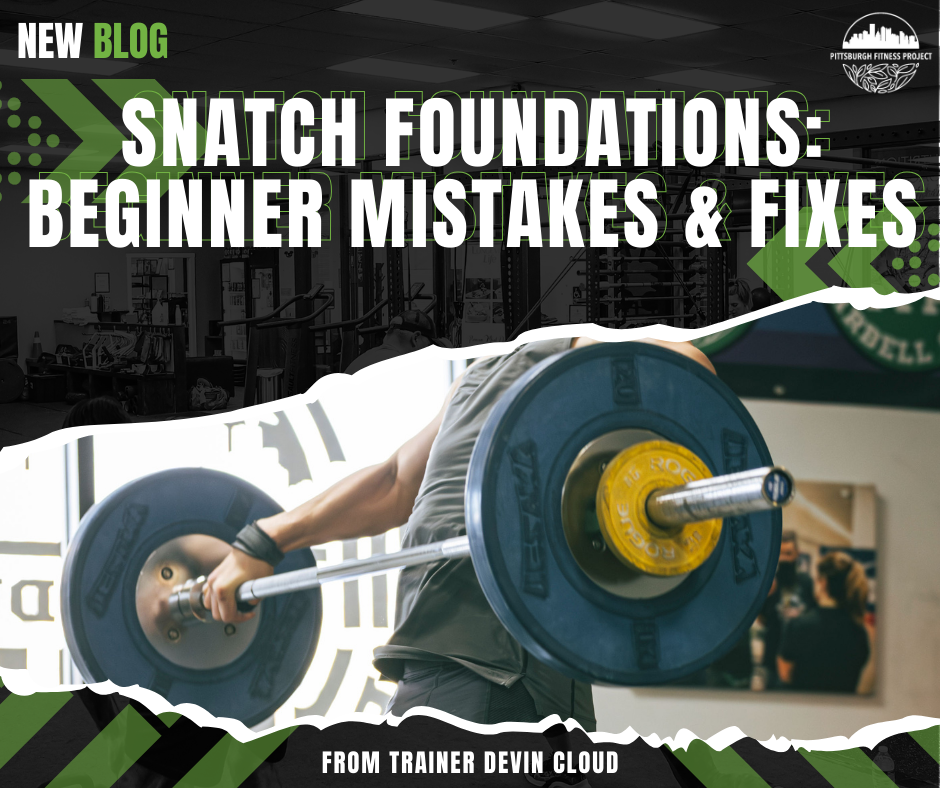
Weightlifting is a sport of grace and explosiveness. While those two descriptions may seem odd to master together, they are essential for the two main lifts in weightlifting. The snatch and clean and jerk are the epitome of those two terms, although we are just going to focus on the snatch for today. The snatch is the more technical of the two lifts as it requires one smooth and fast motion to bring the bar from the floor to over our head. With such a small margin for error (literal inches), there are plenty of little hiccups we can have while learning the movement. Let's discuss some common issues and how to fix them.
Bar Path
In weightlifting, space is the enemy, and by that I mean space between the bar and our body. The bar needs to stay as close to our center of mass and in as straight a line as possible. This allows us to move the bar as forcefully and efficiently as possible. The two ways to solve this are to break down the pull into the lower portion of the pull from the floor to our hip, and then from the hip to overhead.
For the floor to the hip, there are a couple of options. Slow snatch deadlifts or tempo snatch deadlifts, as they’re referred to in weightlifting programs, are performed in a similar fashion as a normal deadlift but at a set speed. So the way this may be written is 4 sets of 5 reps with a 5-second pace from the floor to the hip. For each rep, we are slowing the pace to ensure we keep the bar close to our body and feel each position as we move the bar higher and higher. Once we feel comfortable with deadlift, we can move to slow snatch pulls. This is a similar movement, but with more acceleration coming up towards the hip. Starting with the path of the deadlift, as you pass your mid thigh, you drive your feet down and drive the bar up into your hips, staying balanced over your midfoot.
For the hip to overhead, the easiest option is muscle snatches. These you would start at the hip and can gradually move them down to the start position. From the hip, you would perform the dip and drive, but not allow a rebend of the knees when you catch the bar overhead. This forces you to keep the bar path close to the body and focus on a smooth upward pull. The muscle snatch from the floor would be the end goal, as this incorporates both options I gave previously and combines them into one exercise for the bar path.
Balance
When it comes to balance in the lifts, we are talking about the balance in our feet. Our feet are the only part touching the floor during the lift, therefore we need to ensure our balance is a main focus in order to apply force maximally. A couple of ways to address this are performing pulls or full lifts with pauses in either the pull or the catch position. An example would be a snatch with a pause at the knee. The knee position is a common area where people struggle, as it is where our hips and the bar are the furthest from one another. This usually results in an awkward balance where one may be further on their toes or leaning back with the toes coming up. In either circumstance, we are losing our ability to drive the bar up effectively. Pause variations all us to slow ourselves down and feel where we are in the pull. Pauses in the catch position can also help a lot. Perform snatches with a pause in the catch overhead. This can help with those who struggle with catching the bar or even just with general stability. By spending more
time in these otherwise difficult positions, we can gain exposure and awareness of where the bar is and where it needs to be to feel balanced and strong.
Timing
As silly as it sounds, weightlifting can sometimes feel like you're learning a dance you’ve never seen before. Your body and the bar are dance partners, and they need to be sequenced properly in order to make the outcome as smooth and effective as possible. The coordination between our legs and arms is the source of the timing in the pull and catch position. The tall snatch is a perfect drill to practice timing the pull and catch. Start with the bar at your hip and feet flat or with heels slightly elevated. This can help with foot movement for some. From this start position, think of pulling your elbows straight up and picking your knees up to move your feet. Your feet should land while simultaneously locking out the bar overhead. This is the ideal timing for the catch, as it keeps us connected to the bar's path and momentum while going into the catch, providing stability and control. Performing these prior to full snatches should help you feel more in tune with your timing of the pull and how to orient yourself for the catch.