
GPP FOUNDATION: PART TWO
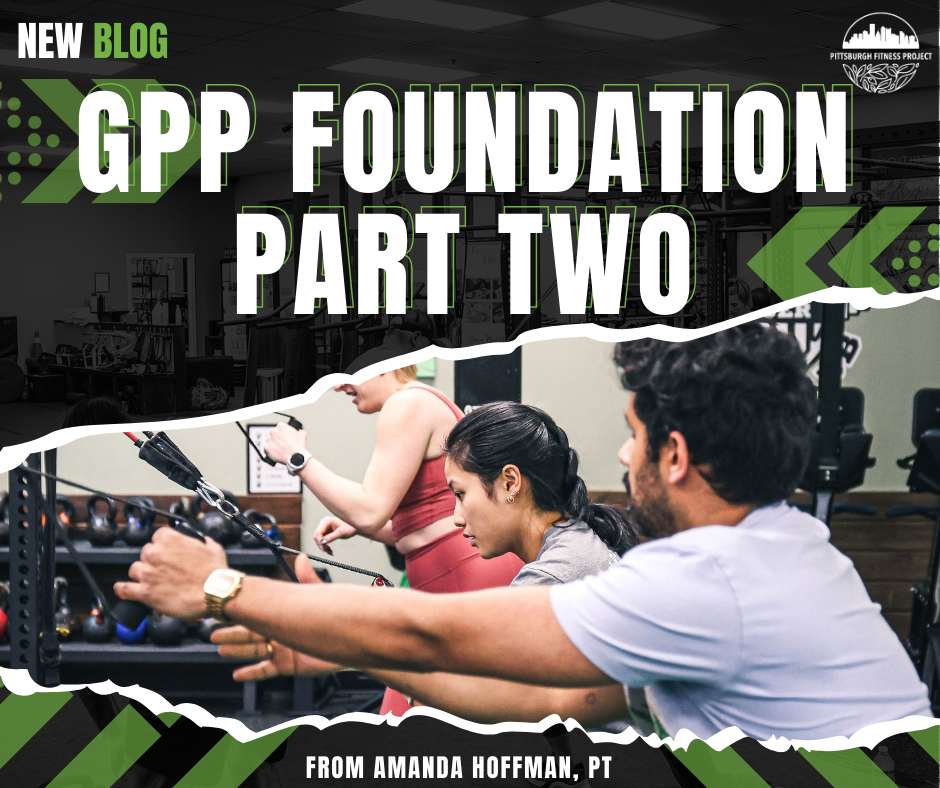
How to Build a GPP Foundation for the New Year?
The start of a new year is a great time to focus on GPP, or general physical preparedness. Before chasing max lifts, aesthetic goals, or a packed training schedule, it’s worth reevaluating whether you have the foundation to support the training you want to do this year, or if there is any exercise or skill you can revisit to improve. Let’s dive a bit more into why this functional foundation is crucial to your long-term fitness success!
So, What Is GPP?
As we talked about last week, GPP refers to ability to work for a prolonged period maintaining quality and intensity of work and displaying appropriate recovery from the activity. This looks like your baseline level of strength, endurance, mobility, coordination, and resilience that supports all other training. This foundational component is the first step in the hierarchy of training other qualities, like strength or power. Think of GPP as the base of a house – before you can build up the walls and decorate, you must have a strong foundation. A strong base allows you to train consistently without burning out, recover better between sessions and phases of training, and handle higher volume and load later on.
So why focus on GPP now? January often brings too many high-intensity workouts, too much volume, ignoring movement quality, and too little recovery. This can lead to burn out, poor recovery, and injuries down the line. GPP is like your insurance policy for your physical health. Building or rebuilding your GPP first sets you up for sustainable progress the rest of the year.
The Pillars of a Strong GPP Foundation
1. Movement Quality & Mobility
Before adding load or speed, you need joints that move well and positions you can control. Focus on mobility exercises for the thoracic spine, hips, shoulders, and ankles; compound movements like squats, hinges, pushes, and pulls; controlled tempo and range of motion. Earn the right to add intensity by mastering the basics.
2. Work Capacity
Aka the ability to do work better and for longer. A solid aerobic base improves your recovery between sets, your ability to do work for longer, and your stress tolerance on the body. What’s this look like? Examples include zone 2 cardio (walking, cycling, rowing), easy conditioning circuits, and short, repeatable efforts you can recover from quickly. If you gas out quickly, your GPP can use some work.
3. Foundational Strength
GPP strength is not about maxing out. It’s about lifting submaximal loads for higher reps or sets, aka higher-quality volume. Exercises should include squats, hinges, carries, pushes, pulls, core work, and unilateral movements. Sets may include rep ranges between 10-20, with 3+ sets of work. By the end of a set you should have 1-2 reps left in the tank, and not feel completely maxed out. You should finish most sessions feeling challenged but capable of training again tomorrow.
What GPP Training Looks Like in Practice
A GPP-focused phase might include 3–5 strength-based sessions per week at moderate intensity with short conditioning finishers or low-intensity aerobic work. Mobility work should be built into warm ups or sets. Over the course of a program, you should be repeating similar movements week to week to build mastery. It may feel "less exciting" at first, but will lead to better recovery, stronger lifts, and heavier loads in future training phases.
The goal of January isn’t to peak — it’s to prepare. Build the base now, and everything you layer on top will be stronger for it.
If you’re not sure where your GPP stands or how to structure it into your training, come check out our group coaching classes. Our members are currently working in a GPP phase. In this class program you can expect higher rep ranges, moderate-intensity cardio, and mobility. Book an assessment with one of our coaches to learn more and get started improving your fitness.