
BEYOND THE IRON
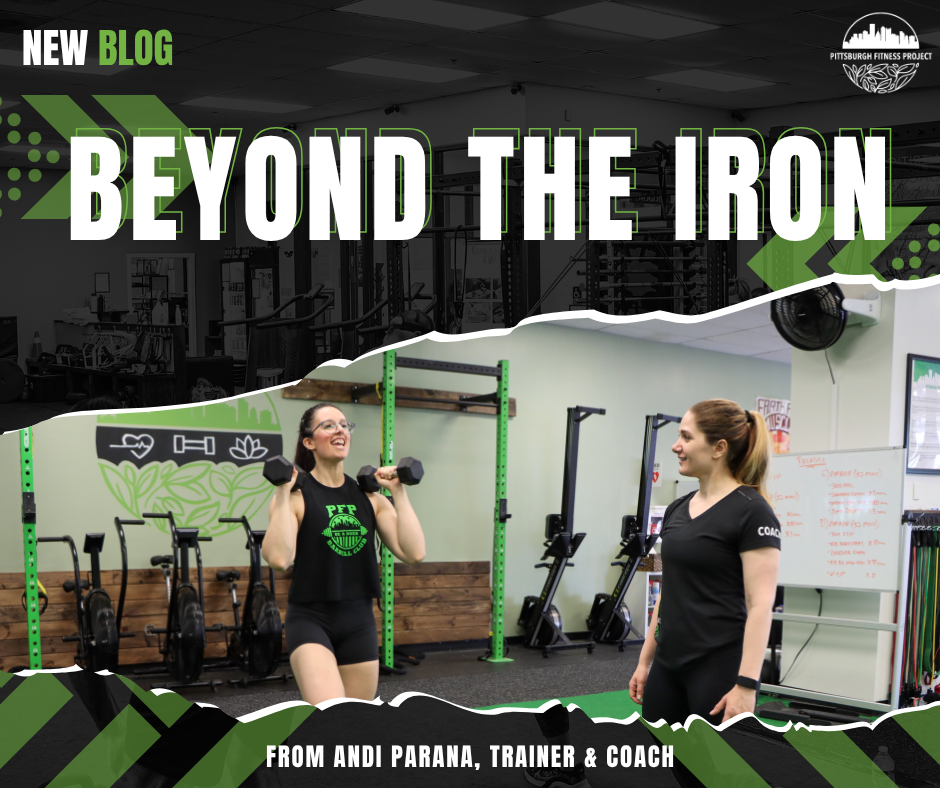
Why Women-Only Strength Classes Are a Psychological Game-Changer
For decades, commercial gym weight rooms were subtly (and sometimes overtly) treated as male territories. Women were guided toward the cardio section—treadmills, ellipticals, and light pink dumbbells—under the false pretense that lifting heavy would make them "bulky."
Thankfully, the fitness landscape has shifted dramatically. Today, more women are stepping up to barbells and squat racks than ever before. However, the rise of women-only strength training classes isn't just about providing physical space; it serves a profound psychological purpose.
At PFP (Pittsburgh Fitness Project), we are total advocates for this movement. While the physiological benefits of resistance training—such as improving bone mineral density, enhancing metabolic health, and building lean muscle—are highly documented, the mental transformation is where the real magic happens. By blending exercise science with sports psychology, dedicated women's strength classes unlock a distinct psychological sanctuary that can fundamentally reshape your relationship with your body and mind.
Here is a look into the sports psychology behind why women’s strength classes are so important, and how our coaching approach fosters deep internal resilience.
1. Cultivating "Mastery Experiences" & Self-Efficacy
At the core of sports psychology is the concept of self-efficacy—an individual’s belief in their own capability to execute behaviors necessary to produce specific performance attainments. According to psychological theory, the most powerful way to build self-efficacy is through mastery experiences.
In a traditional gym setting, a woman might experience "gymtimidation," causing her to stick to exercises where she feels comfortable but unchallenged. A dedicated women’s strength class provides a structured, supportive environment designed to safely push physical boundaries.
When you systematically learn to deadlift your own body weight, perform a full pull-up, or add five pounds to your barbell, you accumulate concrete proof of your own capability. This newfound physical self-efficacy doesn’t stay in the weight room. Sports psychology shows that the internal belief of "I can handle this heavy barbell" directly translates into a global mindset shift: "I can handle a high-pressure presentation, a difficult conversation, or life’s unexpected stressors."
2. Shifting the Lens from Aesthetics to Performance
Societal conditioning heavily pressures women to view their bodies through an aesthetic lens—focusing on shrinking, weighing less, and fitting a certain mold. This often drives extrinsic, fragile motivation prone to burnout or frustration.
Strength classes flip this script entirely by prioritizing performance goals over aesthetic goals. In these spaces, sports psychology principles of goal setting come alive. Instead of tracking calories burned, women track personal records (PRs), repetitions, and technique refinement.
This pivot fosters an intrinsic motivation rooted in the psychological need for competence. Rather than viewing the body as an object to be looked at, you begin to view your body as an instrument of power and capability.
3. Progressive Overload as Stress Inoculation
From a psychological perspective, weightlifting is essentially a laboratory for controlled stress. When you stand under a heavy squat bar, your nervous system experiences an acute stress response.
Sports psychology teaches us how to manage this through a concept known as stress inoculation training. By progressively loading a barbell, you are exposing your mind and body to incremental, manageable amounts of stress. Under the guidance of a coach, women learn to use mental skills like controlled breathing, positive self-talk, and sharp internal focus to push through a difficult repetition.
Over time, this trains the brain to remain calm, focused, and objective during moments of physical discomfort. It builds deep psychological resilience and mental toughness, allowing you to manage everyday anxiety and emotional fatigue with a calm, analytical mindset.
4. The Power of "Vicarious Experience" and Social Support
In sports psychology, self-confidence isn't just built by your own actions; it is also built through vicarious experiences—watching people similar to you succeed.
When a woman walks into a co-ed weight room and sees a man bench-pressing heavy weights, her brain categorizes that as his domain. But when she joins a women’s strength class and sees another woman—perhaps someone of her same age, build, or fitness level—conquering a heavy lift, a cognitive switch flips: "If she can do that, so can I."
Furthermore, these classes build a unique collective dynamic. The shared vulnerability of straining through heavy sets creates a powerful support system. This sense of community satisfies the psychological need for relatedness, which research indicates is vital for long-term exercise adherence and emotional well-being.
5. Countering Stereotype Threat
Historically, spaces of physical power have been gatekept as inherently masculine, leaving many women feeling like imposters in the free-weight section. This triggers what psychologists call stereotype threat—the psychological anxiety that one might confirm a negative stereotype about their social group, which ultimately hinders performance and drives gym drop-out rates.
A women's strength class completely eliminates stereotype threat. It provides a psychologically safe zone where women do not feel watched, judged, or hyper-evaluated. By removing the pressure to conform or perform for an external gaze, you can fully inhabit your physical space, express aggression safely, and reclaim your inherent physical power.
Ready to Reclaim Your Power?
The true magic of a women's strength class happens long after the sweat dries and the weights are put away. While participants walk in looking to build physical strength, they walk out with an entirely rewired psychological architecture.
At PFP, we are launching a brand-new program designed specifically to give you the ultimate mental and physical edge. If you are ready to find your strong in a community that genuinely has your back, check out our upcoming schedule:
Mark Your Calendar for Launch Day
Starts July 6th
Our brand-new women's strength training program kicks off officially on Monday, July 6th.Choose Your Training Stream
Flexible times to fit your life
We offer two distinct schedule options to keep your routine consistent: The Launch Program meets every Monday and Wednesday from 7:00 PM to 8:00 PM. The Recurring Program: Meets every Tuesday and Thursday from 7:00 PM to 8:00 PM.Claim Your Safe Space
Build mastery with expert coaching
Show up, leave "gymtimidation" at the door, and let our expert coaches guide you step-by-step through a structured weekly program focused on safety, progression, and unlocking your true capability.
The Ultimate "Gains" Are Mental
When we give women a dedicated, empowered space to discover just how physically strong they can be, we aren’t just building muscle—we are forging resilient, confident, and unstoppable mindsets.